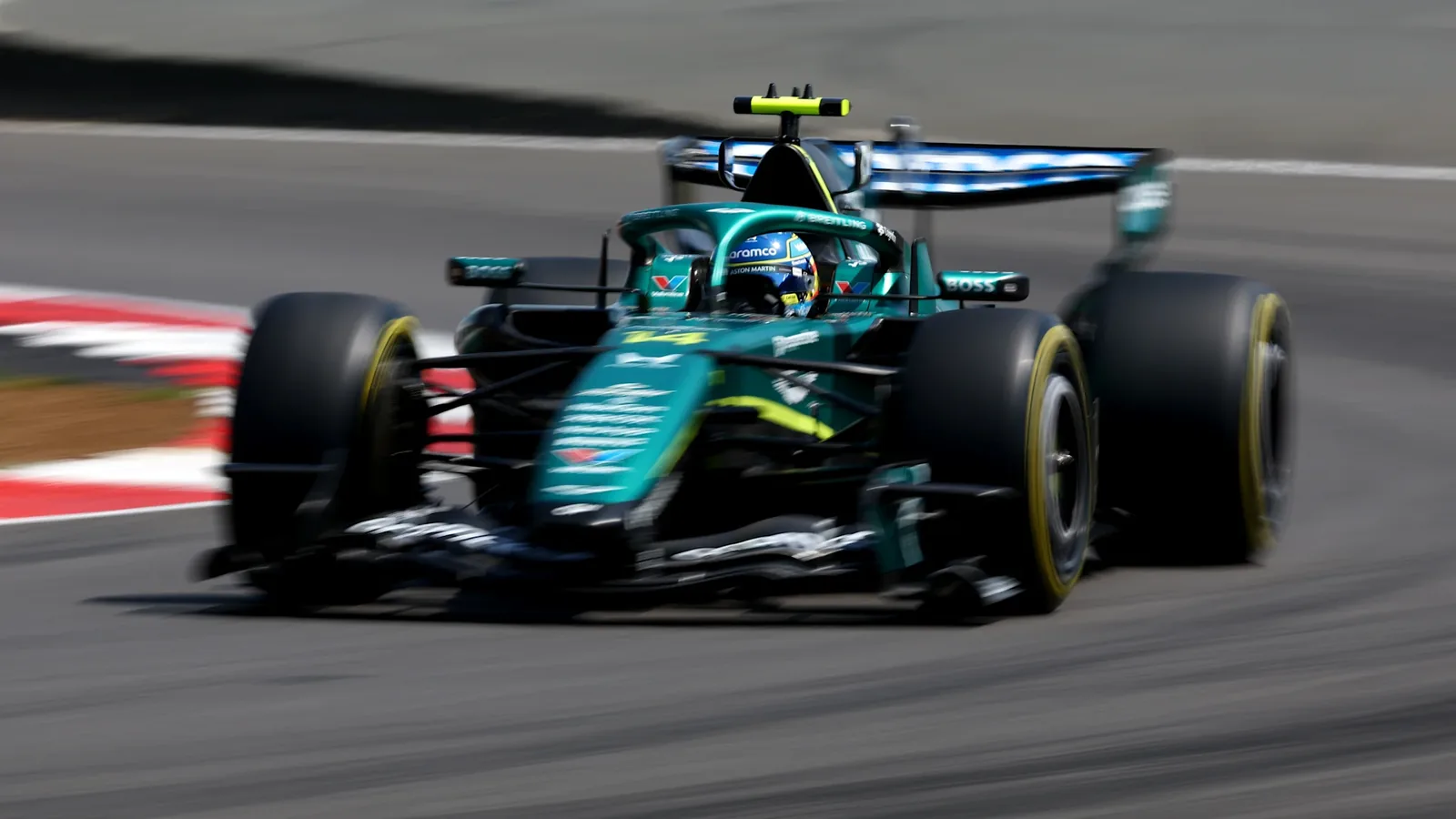
Aston Martin is introducing a significant upgrade package at the Hungarian Grand Prix, which includes a heavily revised car featuring a new chassis and substantial aerodynamic changes. This marks the team’s first major upgrade of the year, following a season start where their car and engine were noted to be underperforming. Driver Fernando Alonso expressed optimism about the new components but cautioned against high expectations for immediate results.
The team opted to introduce all new parts at once, a departure from the more common strategy of gradually releasing smaller upgrades over several races. This decision was made to efficiently use their budget within the sport’s spending cap. However, this approach has meant that Aston Martin has fallen further behind competitors in recent races, particularly at circuits like Silverstone and Spa, due to the performance of their Honda engine.
Alonso’s Perspective on Upgrades and Future
Fernando Alonso emphasised that his focus for the weekend is on understanding the car’s new direction and whether it can unlock performance. He stated he is not thinking about specific numbers or positions, noting the varying gaps to the midfield in recent races. Alonso highlighted that other teams have adopted a more conventional upgrade path, gaining small increments over time, while Aston Martin aims to catch up in one go.
The Honda engine will not be updated this weekend; the Japanese company plans to introduce a development engine at the Dutch Grand Prix after Formula 1’s summer break. Alonso is currently weighing his future in F1, as his contract concludes at the end of the season. He reiterated his long-term commitment to Aston Martin, regardless of his decision to continue racing in F1, stating, “I do have a contract, so I’m not moving.”
Alonso’s decision will not solely depend on the upgrade’s performance. He is also considering whether the high levels of energy management required by the latest F1 engines provide him with sufficient enjoyment and adrenaline. This issue is more pronounced on high-speed circuits, but the slower nature of the Hungarian track means engine management is expected to be less of a concern this weekend.
Adrian Newey, Aston Martin‘s chief technical officer, explained that the team made the difficult decision to delay developments in the first half of the year. This allowed them to reorganise, implement new systems, and conduct thorough research for the ’26 car, which had a tight development schedule. Newey acknowledged that this strategy meant the gap to the front of the field would widen initially.
Alonso believes the team will resolve its issues and that Newey will eventually deliver a top-tier car. He also expressed confidence that Honda will address its engine problems in due course. Alonso mentioned that recent races at Silverstone and Spa were not enjoyable to drive, citing a lack of adrenaline from the current F1 cars. He is seeking to determine if F1 can still provide the excitement he needs.
Team’s Challenges and Expectations
The Aston Martin team has faced significant challenges, with their car being described as underperforming. At the recent Belgian Grand Prix, the team’s performance was notably poor, with Alonso finishing two laps down and over 70 seconds behind one of the Cadillac cars. This performance underscored the underlying weakness of the Honda power unit, which is expected to continue to hinder the team on energy-starved circuits like Monza.
Lance Stroll, Alonso’s teammate, also voiced frustration with the car’s current state, stating there are no strengths and that they can only improve. He highlighted issues such as high-speed aero stalls, understeer, corner entry instability, poor driveability, lack of power, and overall insufficient downforce. These problems contribute to the car’s ranking among the slowest F1 cars since 2010.
The upgrade package for Hungary includes weight reduction, requiring re-homologation and crash testing of the forward chassis. While the main structural elements remain, there are revisions to the rear suspension, a new nose, and substantially revised aerodynamic surfaces. The goal is to bring the car close to the weight limit. Mike Krack, Chief Trackside Officer, stated that the most important goal for the team is to return to competitive racing, as it has been difficult to keep pace with the midfield in recent events.
The collaboration between Aston Martin and Honda has improved, despite initial frustrations. Shintaro Orihara, Honda‘s Trackside General Manager and Chief Engineer, noted that the relationship strengthened through difficult moments, building fundamental working practices. Krack added that both parties committed to working together to overcome challenges, leading to significant improvements in their technical collaboration between Aston Martin‘s factory in Silverstone and Honda‘s engine headquarters in Sakura.
Reserve driver Jak Crawford has been instrumental in the development push, complementing his real-life runs with extensive simulator work, where he has already tested the upgraded AMR26. Alonso is set to turn 45 on 29 July.
Read Also
Source: bbc.co.uk