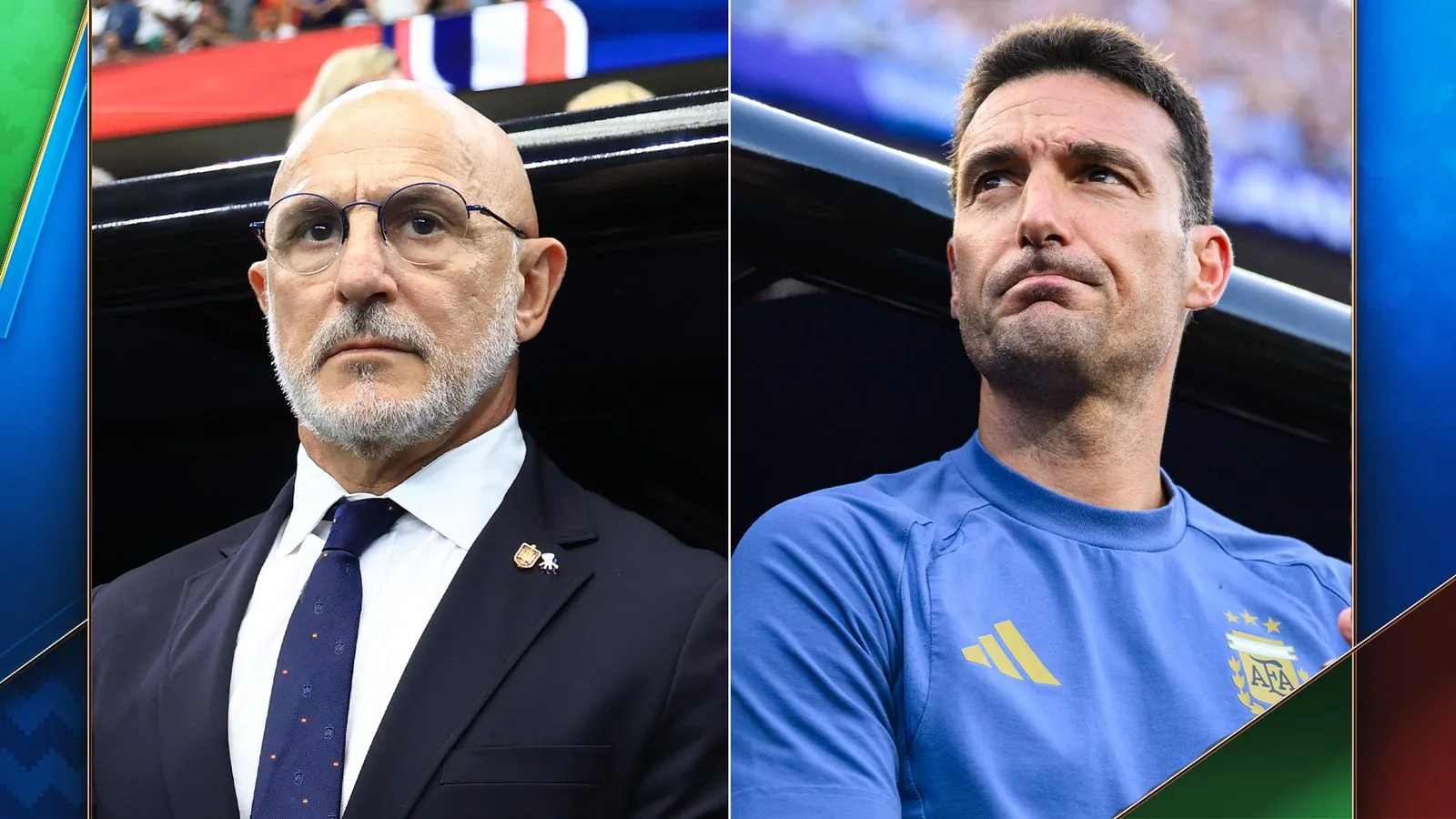
World Cup final approaches
The World Cup final on Sunday will feature Spain against Argentina, a match-up of contrasting styles and managerial approaches. Both teams have reached this stage after navigating challenging paths, with their respective managers, Luis de la Fuente and Lionel Scaloni, earning recognition for their leadership.
Argentina secured its place in the final after a late comeback against England in the semi-final. This victory saw Lionel Messi once again prove to be a decisive factor. Spain, meanwhile, is known for its possession-based football, while Argentina is characterised by its aggressive and passionate play.
The final is anticipated to be a clash of these distinct tactical philosophies. Spain is expected to control possession, aiming to create scoring opportunities through intricate passing. Rodri is highlighted as a key player for Spain, tasked with dictating the tempo of the game from midfield. Argentina, on the other hand, is likely to employ a physical approach, seeking to disrupt Spain‘s rhythm and create space for players like Messi.
Both teams bring a history of success to the final. Spain is the reigning European champion, while Argentina has won several major international trophies, including the last World Cup, with many of the same players in the current squad. This experience in high-stakes matches is expected to contribute to a finely balanced contest.
Managerial journeys to the final
The managers of the two finalists, Luis de la Fuente of Spain and Lionel Scaloni of Argentina, share a unique background. Neither has managed a top-flight club game, yet they have guided their national teams to significant achievements. Scaloni took over Argentina when the team had not won a major tournament in a quarter of a century. Under his leadership, Argentina has won the Copa America and the last World Cup.
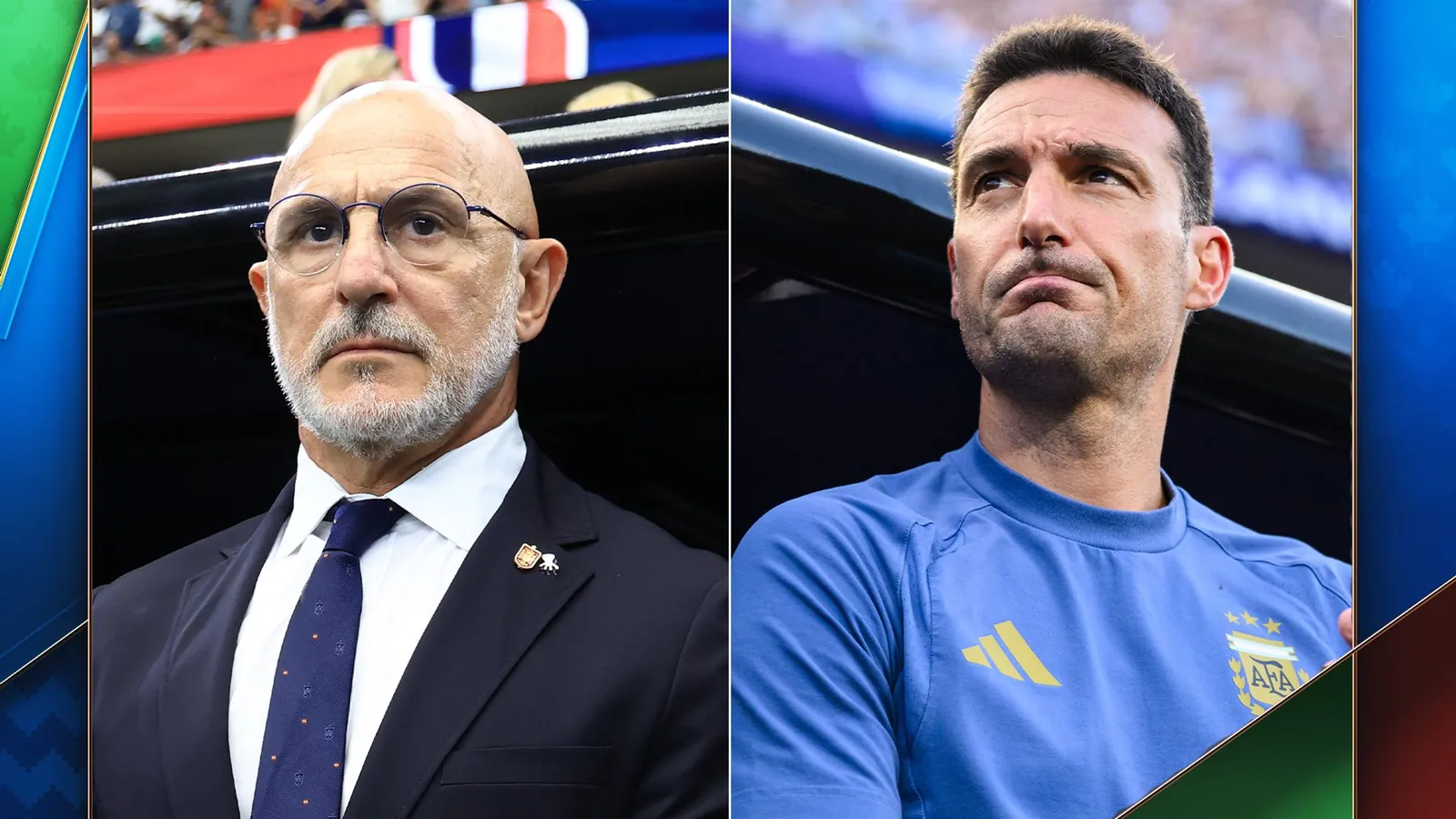
De la Fuente, who was promoted from Spain‘s U21 team, aims to add the World Cup to Spain‘s European Championship triumph in 2024 and their Nations League victory in 2023. His approach to team building, emphasising a sense of ‘family’, has been highlighted by his players. Rodri, who played under De la Fuente in the U19 team, noted the manager’s ability to unite the squad.
Both managers are praised for their ability to foster strong relationships with their players and for their tactical acumen. Scaloni is known for his tactical flexibility and his ability to adapt to different opponents. Alexis Mac Allister commented that Scaloni always knows the right game plan and can adjust it as needed. De la Fuente demonstrated his tactical expertise in Spain‘s semi-final, where his team’s out-of-possession setup effectively stifled their opponents.
Their success contrasts with the experiences of other high-profile managers in the tournament, such as England‘s Thomas Tuchel, Germany‘s Julian Nagelsmann, and Brazil‘s Carlo Ancelotti, all of whom had extensive club management experience but did not reach the final stages of the World Cup. This has led to discussions about what truly constitutes effective international management.
Political banner incident
Following Argentina‘s semi-final victory, a political banner was displayed by some players during celebrations. The banner, which read “LAS MALVINAS SON ARGENTINAS” (The Malvinas (The Falklands) are Argentine), was unfurled by midfielder Giovani Lo Celso and center-back Lisandro Martínez.
This message refers to the British-ruled Falkland Islands, a long-standing point of contention between the United Kingdom and Argentina. FIFA‘s Stadium Code of Conduct prohibits banners of a political, offensive, or discriminatory nature, and Law 4 of the Laws of the Game also bans political messaging.
The UK Business Secretary Peter Kyle stated that the banner was “entirely inappropriate” and expressed an expectation for FIFA to conduct a thorough investigation. While FIFA has not yet commented on potential sanctions, there is precedent for such actions. For example, South Korea‘s Park Jong-woo was banned for two international matches for displaying a political banner in 2012, and Spain‘s Rodri and Álvaro Morata received one-match bans for political statements in 2024.
The final match between Spain and Argentina is scheduled for Sunday.
Read Also
- Bridgetown remembers Sir Garfield Sobers, legendary West Indies all-rounder
- Thomas Tuchel reportedly unimpressed by Kobbie Mainoo during World Cup training
- Royal Birkdale: Bryson DeChambeau given two-shot penalty after second round at The Open
- New Jersey-New York World Cup final faces air quality concerns from Canadian wildfire smoke
Source: cnn.com