England’s World Cup Semi-Final Exit
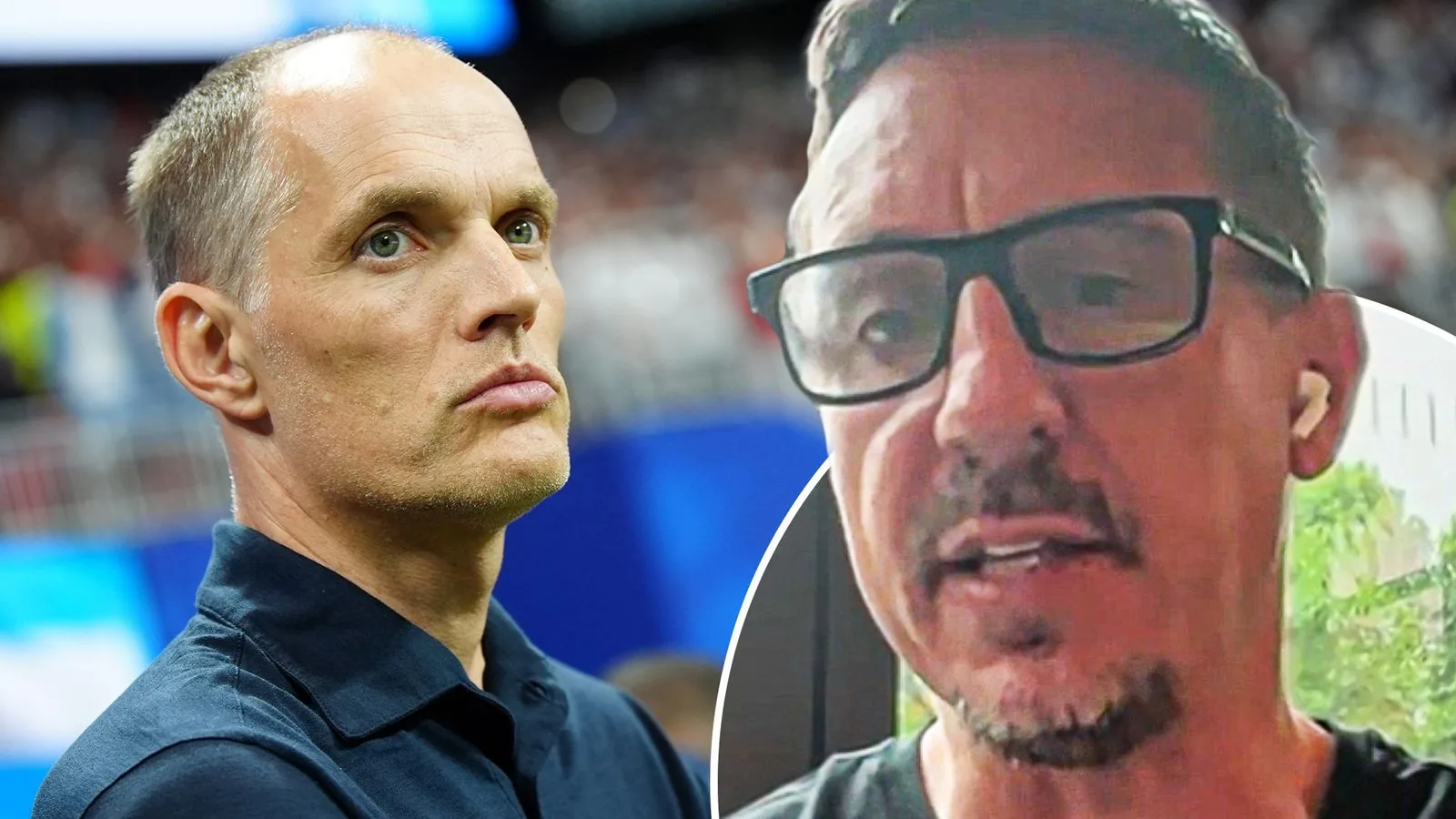
England were defeated 2-1 by Argentina in a recent World Cup semi-final match. The outcome has led to significant discussion regarding the tactical decisions made by England manager Thomas Tuchel, particularly concerning his substitutions and overall strategy during the game.
Despite Anthony Gordon giving England an early lead in the second half, the team’s approach shifted, with Tuchel’s side reportedly dropping deeper under pressure from Argentina. This defensive posture ultimately saw Argentina score twice through Enzo Fernandez and Lautaro Martinez, securing their place in the final against Spain.
The Football Association is understood not to be reviewing Tuchel’s position, with the manager expected to remain in charge for Euro 2028, following a two-year contract extension signed before the World Cup.
Messi’s Decisive Impact
For much of the match, Lionel Messi appeared to be contained by England’s defensive efforts. Data from the first hour indicated that England successfully limited his involvement in dangerous areas. Messi’s only possession within the central penalty area was halted by an Elliot Anderson tackle shortly after Gordon’s goal. His sprinting speed, as defined by Fifa, was lower in this match compared to previous rounds against Switzerland and Egypt.
The Argentina captain’s relative lack of shots also suggested England’s strategy was effective initially. His only attempt on goal was from long range and blocked before reaching the box. This marked one of the few World Cup matches where Messi, playing the full 90 minutes, had such a limited number of shots in normal time. His heat map also showed him operating in his usual right half-space, an area England would have anticipated.
However, a subtle yet decisive shift occurred in the second half. Messi began to operate more from the flank, specifically between the edge of the penalty box and the touchline, extending up to the halfway line. In the opening 45 minutes, his only touch in this zone was near the centre circle, where he passed to Giuliano Simeone, who was offside.
This change in positioning proved crucial. Messi attempted six open-play crosses from this wide region in the second half, a significantly higher number than his average of 2.3 crosses per 90 minutes in league football since 2015. One of these deliveries led to a header from Nico González, which Jordan Pickford saved.
This moment may have influenced Tuchel’s decision to bring on Ezri Konsa, followed by Dan Burn, and switch to a back five. While this strategy had worked against Mexico, Messi’s crossing ability proved to be a different challenge. His cross for Lautaro Martínez’s winning goal generated 0.53xG, surpassing England’s total for the entire match. This assist was only his second World Cup assist with his right foot, and it was considered more difficult to execute than a cutback from the byline.
Post-Match Reflections and Criticisms
Following the defeat, former player Gary Neville offered a balanced perspective on England’s exit, acknowledging recurring patterns in the team’s tournament performances over the past two to three decades. He noted that Tuchel’s attempt to see out the game by sitting deep, similar to a strategy used with 10 men against Mexico, ultimately failed against Argentina’s pressure and quality.
Neville highlighted a long-standing issue for England teams: a tendency to drop deep and protect a lead rather than maintaining an offensive mindset. He suggested this psychological aspect, where legs become heavy under pressure, leads players to prioritise keeping a clean sheet over seeking a second goal. He also pointed out that England may lack the technical ability to retain possession effectively in high-pressure situations, unlike other elite international teams.
He further commented on Tuchel’s squad selection, suggesting it was built for counter-attacking, which meant technical players like Phil Foden, Cole Palmer, Morgan Gibbs-White, and Adam Wharton were not included, and Kobbie Mainoo was not brought on to gain control of the game. The decision not to introduce players like Bukayo Saka or Marcus Rashford for pace was also mentioned as a potential mistake that Tuchel might reflect upon.
Neville also addressed criticism from Argentina defender Cristian Romero, who called Neville’s assessment of Argentina’s centre-back pairing as the ‘best-worst’ in the world ‘stupid’. Neville responded by reiterating that while Romero and Lisandro Martinez are talented, they do make mistakes and have conceded goals, pointing out that Argentina’s success in the tournament was significantly due to Lionel Messi’s contributions rather than their defensive solidity.
The match concluded with Argentina advancing to the final, leaving England to reflect on a campaign that ended in the semi-finals on Wednesday.
Read Also
- Atlanta sees fan clashes ahead of England and Argentina World Cup semi-final
- England's World Cup dreams end in semi-final defeat to Argentina
- Argentina could face disciplinary action after displaying Falklands banner following England win
- Atlanta: England manager Thomas Tuchel to remain until Euro 2028 despite World Cup semi-final loss
Source: theguardian.com