England enter knockout stage
England head coach Thomas Tuchel has described the World Cup knockout stage as a critical phase in the team’s journey. His stated mission is to secure the trophy for England, a feat not achieved since 1966. The initial phase involved a training camp and topping Group L to qualify for the last 32. The second phase, featuring victories against Croatia and Panama, alongside a draw with Ghana, was deemed satisfactory.
The team now faces a challenging period where any misstep could end their campaign. They are scheduled to play DR Congo in Atlanta on Wednesday at 17:00 BST. This match will be broadcast live. Recent results in the tournament have shown that upsets are possible, serving as a warning to stronger nations.
The match in Atlanta will take place in the temperature-controlled Atlanta Stadium, which has a closed roof, shielding players from the city’s heat and humidity. So far, England‘s performance has been about getting the job done, but the knockout format means every game is now decisive.
Defensive concerns for Tuchel
Tuchel‘s team selections have involved tactical adjustments, managing player minutes, and addressing injuries, all aimed at guiding England through the tournament. A notable area of vulnerability for England is their defence, which could be exploited by elite opponents.
Former England captain Wayne Rooney highlighted the lack of stability in the back four, stating that it is the area where consistency is most needed. Defensive fragilities were identified even before the tournament began, particularly concerning potential injuries to players like Newcastle‘s Tino Livramento and Chelsea captain Reece James, both of whom have had previous injury issues.
Livramento was ruled out before the World Cup commenced. James sustained a hamstring injury, which Tuchel expressed surprise about. These injuries have complicated Tuchel‘s defensive choices, especially at right-back, further compounded by Jarell Quansah‘s injury against Panama.
Both James and Quansah will be unavailable for the match against DR Congo. Tuchel mentioned that both players are nearing a return, with Quansah slightly ahead of James in recovery. This leaves Djed Spence as the primary right-back option, though Tuchel could also consider moving centre-back Ezri Konsa to that position, potentially allowing for the return of John Stones.
The defence has seen changes, with Tuchel starting Stones and Konsa in the victory against Croatia, then later opting for Konsa and Marc Guehi, with Stones not featuring. Tuchel has also had to consider that Stones made only five Premier League starts before leaving Manchester City, and James started 20 games for Chelsea last season.
Tuchel‘s preference for versatile defenders capable of playing on both flanks, and central defenders who can cover full-back positions, has created a challenging situation for England. Should England advance to a potential quarter-final against Brazil and Vinicius Jr, a specialist defender may be required. Tuchel also needs to decide whether Arsenal‘s Bukayo Saka will start against DR Congo, as Saka is managing an Achilles tendon issue.
Addressing the media, Tuchel stated that the team must find ways to win and perform at the highest level. He acknowledged England‘s status as favourites and the expectation to progress beyond the round of 32. Every decision from this point forward is crucial for the head coach.
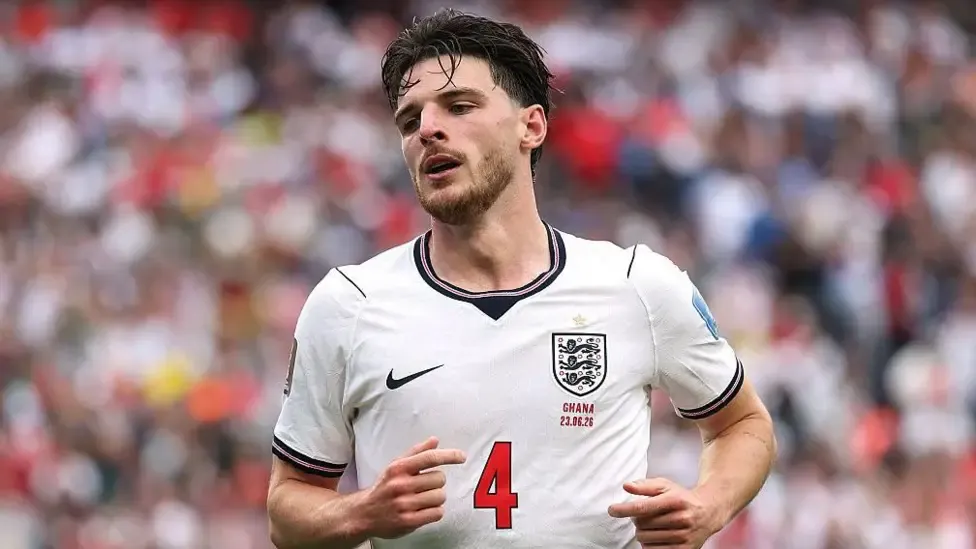
Declan Rice‘s importance to the team was highlighted when Tuchel rested him for the match against Panama, a decision influenced by Rice being on a yellow card and managing his own hamstring and calf issues. England‘s performance against Panama, where they conceded 13 shots and appeared vulnerable to counter-attacks, underscored Rice‘s irreplaceable role alongside Harry Kane and Jude Bellingham.
The selection of attacking players like Bellingham and Morgan Rogers yielded benefits but also left England exposed in midfield. Rice‘s ability to provide a defensive screen, contribute to attacks, and deliver from set pieces is considered vital for England‘s World Cup aspirations.
DR Congo’s tactical approach
England enters the match against DR Congo with an expectation of victory. However, the tactics employed by DR Congo manager Sébastien Desabre are anticipated to make the game more challenging than statistical probabilities might suggest. Desabre has adopted a specific strategy for facing stronger teams in the tournament, differing from his approach in qualifying matches.
During qualification, DR Congo typically used a four-man defence. However, for their warm-up match against Denmark and their group stage games against Portugal and Colombia, they switched to a 5-3-2 formation. This tactical shift allowed DR Congo, ranked 65th globally, to concede only two goals across these three group stage matches against teams ranked 19th, sixth, and 17th respectively.
DR Congo‘s defensive solidity is further evidenced by their ability to limit high-value scoring opportunities for opponents. According to one report, Denmark generated shots worth 0.74 expected goals, while Portugal and Colombia managed 0.65 xG and 0.98 xG respectively. Desabre‘s side excels at frustrating opponents, forcing them into long-range, low-probability shots.
By keeping opposing teams away from their goal, DR Congo ensures that the quality of chances they face remains low. The average non-penalty shot against DR Congo in the group stage was worth 0.06 expected goals, compared to the tournament average of 0.10. Only Spain‘s defence recorded a better measure, though they also maintained significantly more possession.
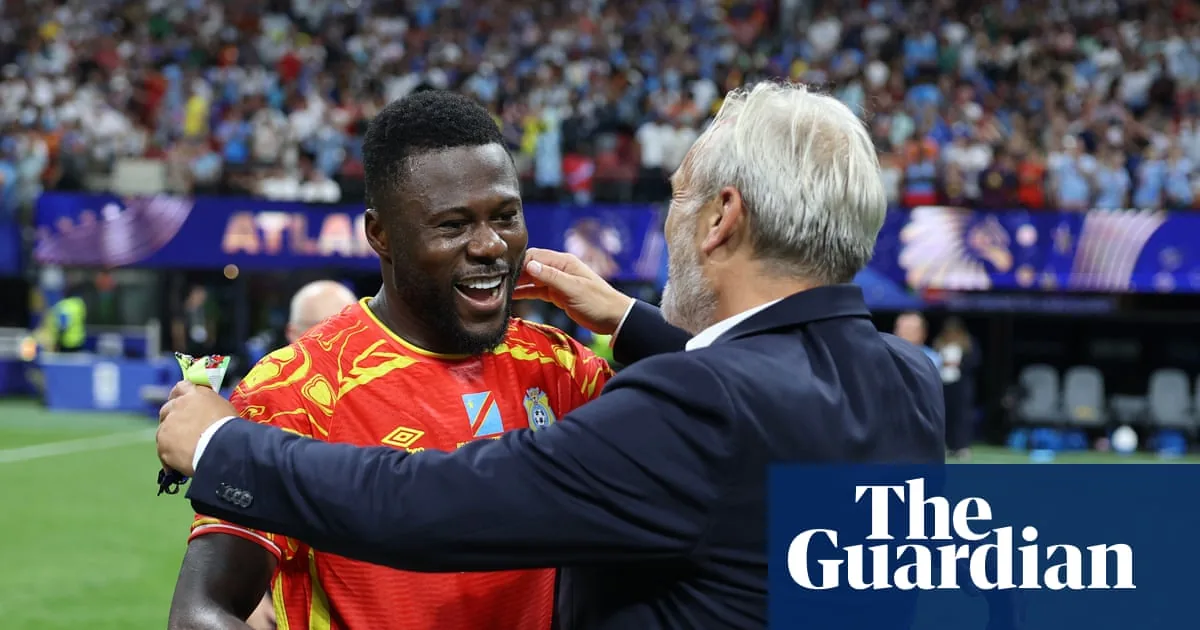
DR Congo allowed only four more shots into their penalty area than England during the group stage, an impressive feat given the strength of their opponents. Captain Chancel Mbemba leads a disciplined backline that is not prone to errors. The team caught 11 opponents offside in the group stage, among the highest in the tournament, and made only one error directly leading to an opposition shot, two fewer than England.
Although these two teams have not met previously, Tuchel experienced a similar tactical challenge in the goalless draw with Ghana. In that match, England did not score from a set piece, which might lead Tuchel to consider dead-ball situations as a way to break down DR Congo‘s low block. However, DR Congo also demonstrated strong defence against set plays, allowing the ninth-lowest expected goal total from set pieces among the 48 countries in the group stage.
England will need to disrupt DR Congo‘s resilient back five. A positive sign for England is their improving dribbling in advanced areas throughout the tournament, with four successful opposition-half take-ons against Croatia, six against Ghana, and seven in their last match. One such dribble by Jude Bellingham led to the corner from which he scored the opening goal against Panama.
Ultimately, England may need to be more clinical. They missed nine Opta-defined big chances in the group stage, and only Norway had more total shots than England‘s 13. Given that DR Congo has allowed opponents only two big chances, creating these opportunities will be a significant task. Tuchel is aware of the potential for upsets, noting that Germany‘s defeat by Paraguay and the Netherlands‘ loss to Morocco underscore the narrow margins in knockout football.
He stated that there is no over-confidence in England‘s approach and that the nature of knockout football, where strong teams can be eliminated, makes him feel calm rather than nervous. He believes this understanding can help the team avoid over-expectation. England must ensure they do not become another victim of an upset against DR Congo.
Read Also
Source: bbc.com