
New Rule to Address Tactical Stoppages
English football authorities are set to introduce a trial for new measures aimed at addressing tactical timeouts by goalkeepers. The Premier League, EFL, FA, National League, WSL, and Pro Ref have collectively agreed to this trial, which has received approval from the International Football Association Board (IFAB). This initiative is part of an ongoing commitment to maintain the pace and flow of matches across the men’s and women’s professional game in England.
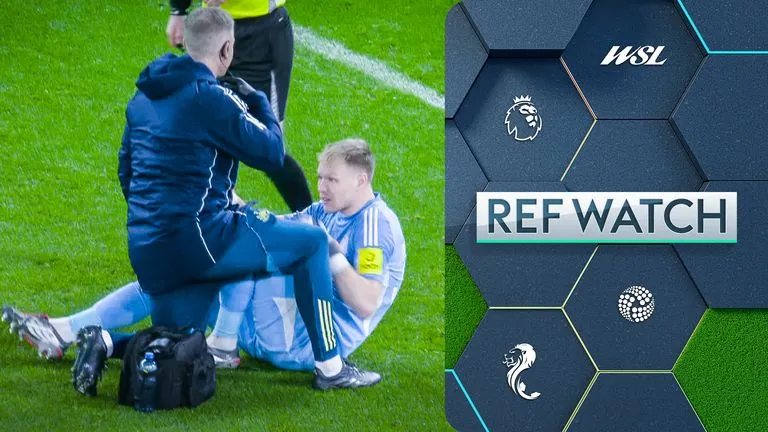
The new trial is designed to counter instances where goalkeeper injuries may have been used to disrupt game momentum, slow down play, or create opportunities for tactical instructions from managers. The trial will be implemented across professional leagues in England, though it will not extend below National League Step 2 in the men’s game.
Details of the Goalkeeper Injury Trial
Under the new rules, if a referee signals for a physio to treat a goalkeeper, the coach will have 10 seconds to select an outfield player to leave the pitch. This nominated player must remain off the field for a minimum of one minute after play restarts. If no player is chosen by the coach within the time limit, the team captain will be required to leave the field instead.
The primary goal of this measure is to ensure that genuine injuries receive appropriate medical attention without allowing teams to gain a sporting advantage from stoppages. This approach seeks to balance player welfare with maintaining the integrity and flow of the game. English football bodies, in collaboration with IFAB and other stakeholders, will monitor the trial’s effectiveness throughout the season.
There are specific exceptions to the new rule. These include situations where a free kick is awarded for a foul on the goalkeeper and immediate treatment is needed, when a goalkeeper and an outfield player collide and both require attention, or if the goalkeeper is bleeding. These exceptions aim to prevent penalising teams for unavoidable medical situations.
Previous Incidents and Broader Measures
The introduction of this trial follows previous incidents that have drawn attention to the issue of tactical timeouts. In November, Leeds United boss Daniel Farke accused Manchester City goalkeeper Gianluigi Donnarumma of feigning injury to disrupt play. Similarly, in December, Gary Neville suggested that Newcastle’s Aaron Ramsdale went to ground against Manchester United following an instruction from Lewis Hall, which reportedly originated from Magpies boss Eddie Howe. This particular stoppage occurred in the eighth minute of the match, with Luke Shaw waiting to take a throw-in for United. Manchester United had taken the lead through Patrick Dorgu, and the match concluded with a 1-0 score.
Another instance occurred in March, when Brighton boss Fabian Hurzeler criticised David Raya for what appeared to be a tactical timeout. These events highlight the concerns that led to the development of the new trial.
This trial is part of a broader set of measures introduced across the professional game to increase ball-in-play time and reduce unnecessary delays. One such measure, the goalkeeper eight-second rule, was successfully implemented last season. Additionally, from the 2026-27 season, a five-second countdown will be used by match officials to address players who unfairly delay throw-ins or goal kicks. Furthermore, a ten-second time limit for substituted players to leave the pitch will be in operation across the professional game, starting with the Carabao Cup on Saturday 1 August.
The trial could potentially be seen for the first time in the Carabao Cup preliminary round.
Source: skysports.com