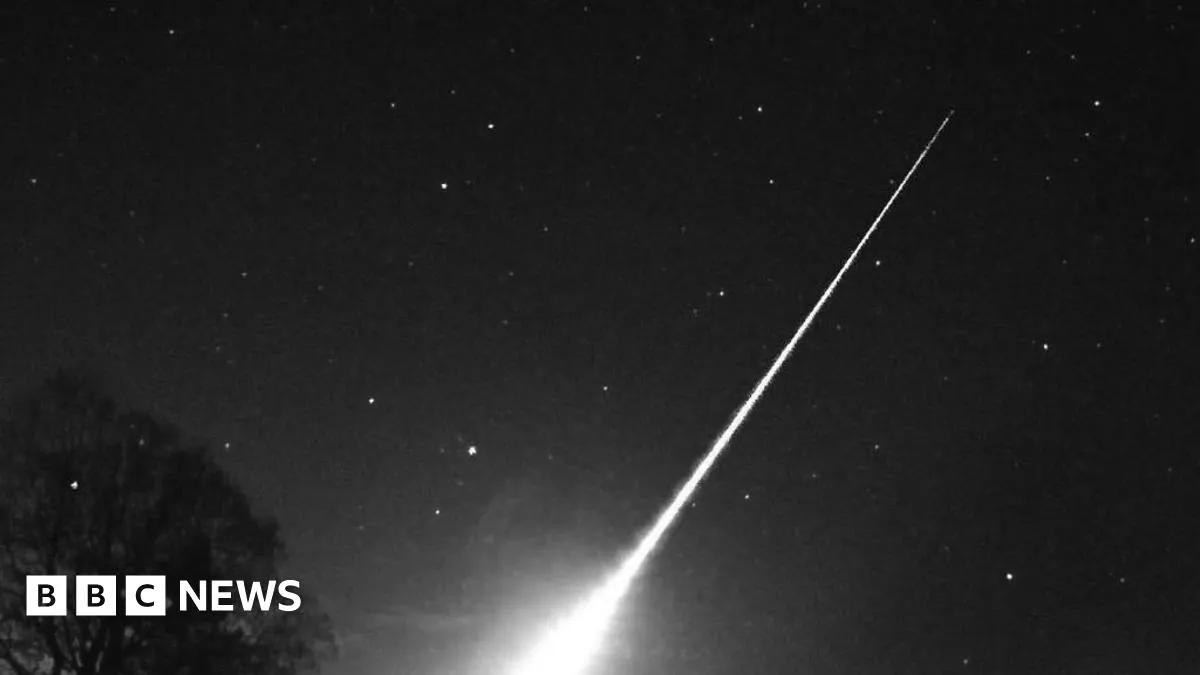
A meteor was spotted in the skies above East Yorkshire and Lincolnshire at 00:24 BST, according to the UK Fireball Alliance. Eyewitnesses reported a bright fireball streaking across the night sky, capturing the attention of stargazers and residents alike.
The meteor sighting comes just ahead of the anticipated Lyrids meteor shower, which is set to begin on April 14 and run until April 30, 2026. During its peak on the night of April 21 into the early morning of April 22, observers can expect to see a medium rate of shooting stars, with estimates of 5-6 meteors per hour.
The Lyrids meteor shower is known for its connection to Comet Thatcher, which leaves behind debris that creates the spectacular display. Stargazers are advised to look towards the east after 10 p.m. local time on April 21 to catch the best view of the meteors. Interestingly, meteors from the Lyrids typically lack the long tails commonly associated with shooting stars.
Charlotte Bays from the UK Fireball Alliance noted, “Based on the fireball trajectory, the event occurred over the North Sea so, sadly, we do not expect any recoverable meteorites.” This highlights the transient nature of meteors, which burn up in the atmosphere, contrasting with meteorites that are less frequent and often survive the descent to Earth.
The moon will be 27% full during the peak of the Lyrids meteor shower, which may affect visibility. NASA recommends that the best time to view the meteor shower is during its peak hours, particularly in the dark hours after the moon sets and before sunrise. Observers should ensure they have a clear view of the entire night sky, as meteors can appear from any direction.
As the Lyrids meteor shower approaches, excitement builds among astronomy enthusiasts. This event is one of the first major meteor showers of the year, followed closely by the Eta Aquariids. The Lyrids are known for their historical significance, having been observed for over 2,600 years, making them one of the oldest recorded meteor showers.
With the meteor sighting in East Yorkshire and Lincolnshire, the public’s interest in celestial events is reignited. As people prepare for the upcoming Lyrids meteor shower, the recent meteor serves as a reminder of the wonders of our universe. Details remain unconfirmed regarding any potential meteorite recovery from the recent sighting, but the anticipation for the Lyrids continues to grow.