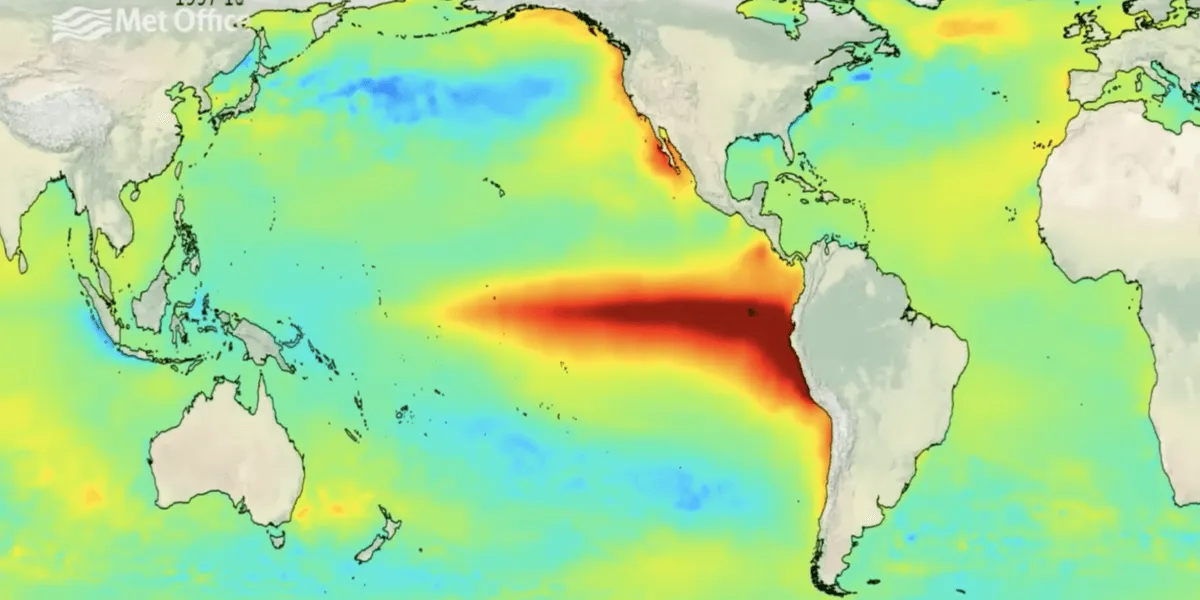
A pressing question arises: how will the anticipated El Nino impact the UK’s summer weather in 2026? Experts indicate that a rare ‘super El Nino’ is likely to lead to significantly hotter conditions across the country, with potential record-level temperatures.
El Nino, a climate phenomenon characterized by rising sea surface temperatures, has been linked to hotter summers and colder winters in the UK. Current forecasts suggest that the El Nino expected to develop in the second half of 2026 could be one of the strongest ever recorded, with a 62% chance of emergence. The last El Nino occurred in 2023 and resulted in notable changes in global weather patterns.
According to meteorologists, El Nino conditions arise when winds across the Pacific Ocean slow or change direction, leading to significant alterations in jet streams and precipitation patterns. This can result in extreme weather events, not just in the UK but globally. The Met Office has warned that the upcoming El Nino could lead to unprecedented temperatures, raising concerns among climate scientists and policymakers.
Grahame Madge from the Met Office stated, “There is a very strong signal that a significant El Niño is likely to develop later in the year.” This aligns with insights from Jim Dale, who noted that El Nino tends to increase the likelihood of hotter weather over Spain and the Continent, suggesting that the UK could experience similar effects if a southerly airflow occurs.
El Nino is part of the El Niño-Southern Oscillation (ENSO) cycle, which also includes La Niña. The phenomenon is defined as a ‘super El Nino’ when sea surface temperatures spike by at least 2 °C above the long-term average. The last significant El Nino event was 140 years ago, and the impacts of such strong occurrences are often consistent across the globe, as highlighted by Tom Di Liberto.
As we look ahead, the exact impact of El Nino on UK weather will become clearer later in the year. Details remain unconfirmed, and forecasts made in spring may not account for unexpected changes that can occur over the summer months. Meteorologists are closely monitoring Pacific temperature forecasts, with expectations of confirmation of El Nino conditions by mid-summer.
In summary, the potential for a ‘super El Nino’ in 2026 raises significant concerns about the UK’s summer weather, with implications for heatwaves and extreme weather events. As the situation develops, continued observation and research will be critical in understanding the full scope of El Nino’s impact on the UK and beyond.