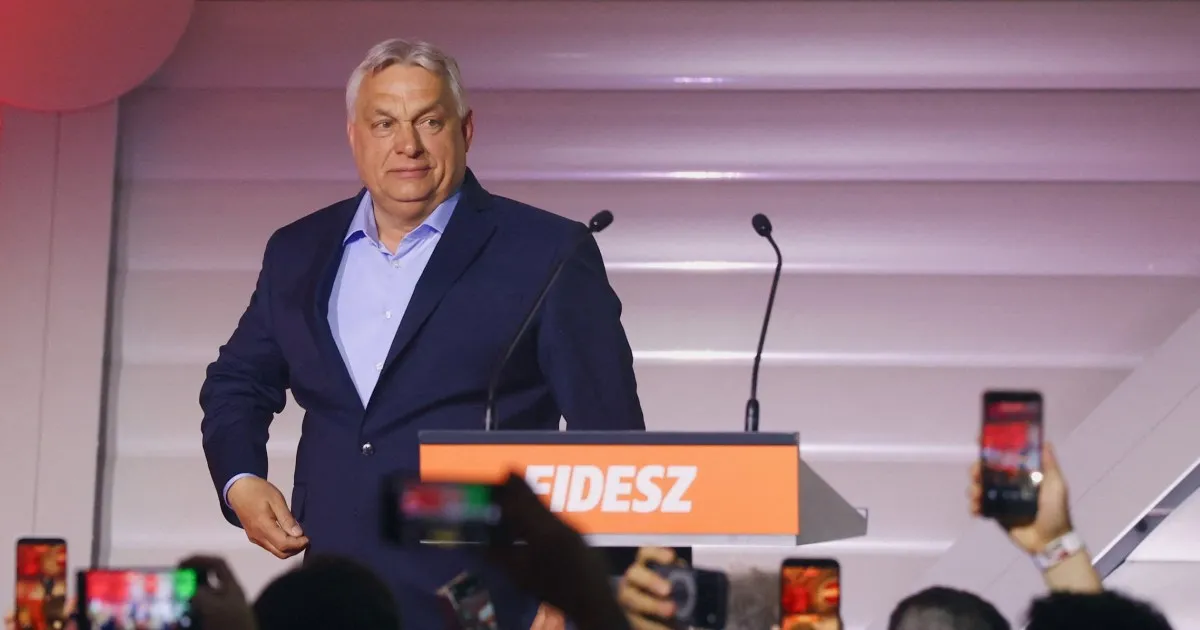
“Hungary has chosen Europe and that it returns to its European path,” declared Ursula von der Leyen, President of the European Commission, following the recent legislative election that saw Viktor Orban suffer a major defeat after 16 years in power. This shift in Hungary’s political landscape is poised to have significant implications for the European Union, particularly regarding its support for Ukraine.
The newly elected government in Hungary is expected to unblock the EU’s 90-billion-euro loan to Ukraine, a critical financial lifeline amid ongoing geopolitical tensions. This development comes as Belgium’s Prime Minister Bart De Wever emerges as a new Ukraine-sceptic leader within the EU, reflecting a growing divide among member states on the issue.
Slovakia, under Prime Minister Robert Fico, aligns closely with Orban’s previous stance, while Czechia’s coalition government led by Andrej Babis also expresses skepticism towards Ukraine. Meanwhile, Poland’s President Karol Nawrocki has been at odds with the pro-Ukrainian government of Prime Minister Donald Tusk, highlighting the fractures within the EU regarding support for Ukraine.
As the EU grapples with its worst geopolitical crisis in history, its role in international affairs remains crucial. The EU provides 42 percent of Official Development Assistance (ODA) and finances a quarter of the UN’s regular budget, underscoring its commitment to global stability.
Kaja Kallas, Estonia’s Prime Minister, emphasized the importance of the EU’s support for the UN, stating, “The EU’s support for the UN now is more vital than ever.” This sentiment reflects the EU’s ongoing dedication to upholding international law and peace, especially in light of recent conflicts.
The EU has consistently championed Ukraine’s sovereignty and territorial integrity, but internal divisions may complicate its future actions. With Hungary’s shift towards a more pro-European stance, the dynamics within the EU could change, potentially leading to a more unified approach to supporting Ukraine.
As the situation evolves, observers will be watching closely for any further developments regarding Hungary’s new government and its impact on EU policies. The next expected steps include discussions on the unblocking of the loan to Ukraine and how member states will navigate their differing perspectives on the ongoing conflict.