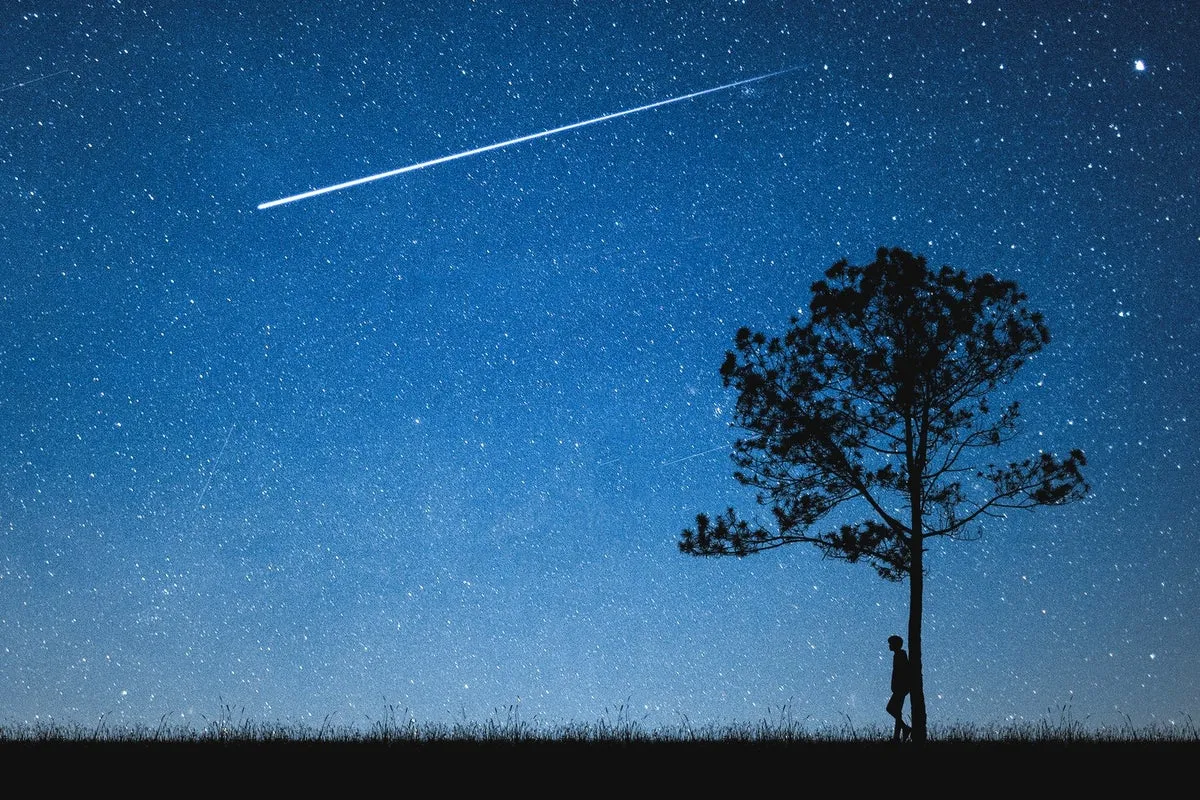
The Eta Aquarid meteor shower peaks on May 6, 2026, but its visibility will be significantly hindered by a bright moon. Observers in the Northern Hemisphere may see fewer than 10 meteors per hour due to light pollution from the moon.
Before this development, many astronomy enthusiasts anticipated a spectacular display. Under ideal conditions, Southern Hemisphere observers could witness up to 50 meteors per hour.
As of early Tuesday, the moon is expected to be 84% full during the peak hours. This brightness will obstruct the view of shooting stars for those in less favorable locations.
According to Teri Gee, an expert from the American Meteor Society, “For us in the Northern Hemisphere, it’s not going to be as impressive.” This stark contrast highlights the challenges faced by stargazers in different regions.
The best viewing time for the Eta Aquarids will be between midnight and 4:25 AM. Despite the moon’s interference, dedicated observers may still catch glimpses of meteors streaking across the sky.
The Eta Aquarids are remnants from Halley’s Comet, which last passed near Earth in 1986. It takes approximately 76 years for Halley’s Comet to complete its orbit around the sun.
Royal Museums Greenwich advises that hunting for meteors is a waiting game. They recommend bringing a comfy chair and dressing warmly, as stargazing can take time.
Nico Adams emphasizes that viewers should look for bright streaks appearing briefly in their peripheral vision. This technique can enhance the chances of spotting meteors despite challenging conditions.
For those eager to experience this celestial event, patience and preparation will be essential. Observers must find dark locations away from urban light pollution to maximize their chances.
The next anticipated visit from Halley’s Comet is expected in 2061. Until then, meteor showers like the Eta Aquarids offer a glimpse into the wonders of our universe.