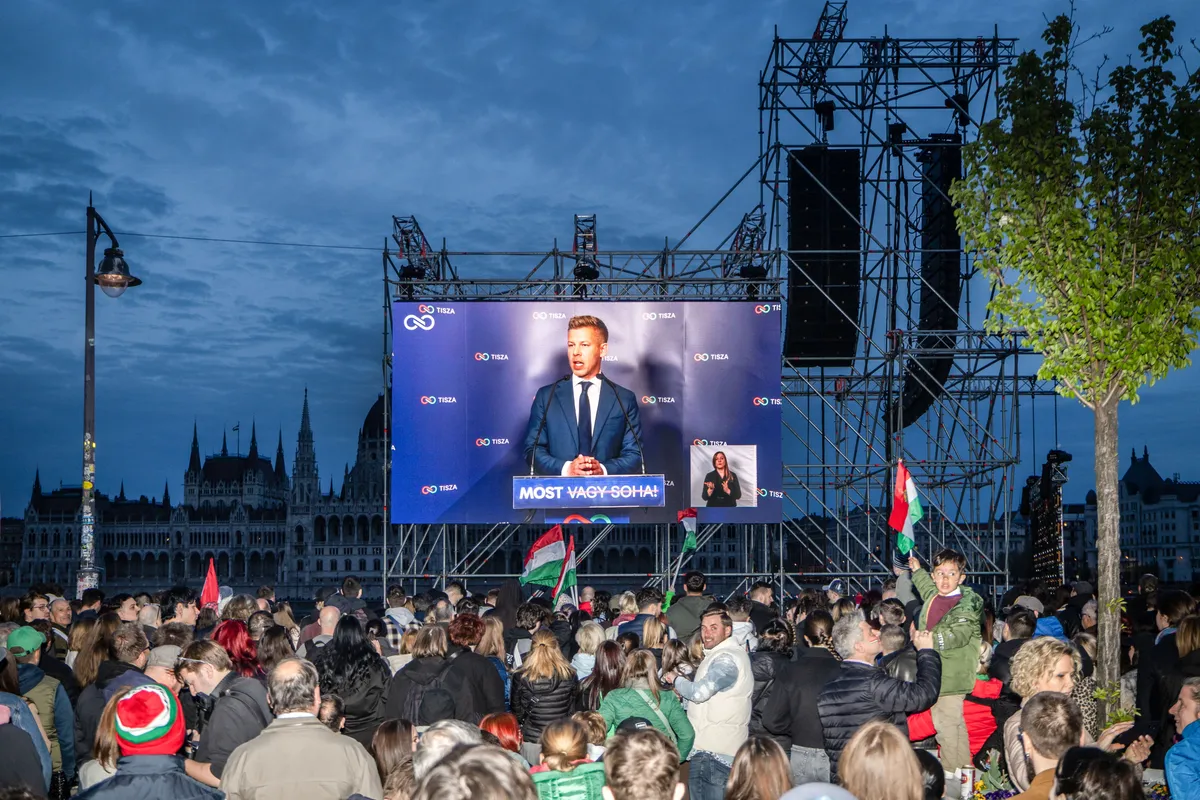
The Tisza Party has achieved a historic victory in Hungary’s parliamentary election, winning a commanding two-thirds majority with 138 out of 199 seats. This outcome not only marks a significant political shift but also brings an end to Viktor Orbán’s 16-year tenure as Prime Minister, a period characterized by increasing authoritarianism and controversial policies.
In a stunning defeat, Orbán’s Fidesz party managed to secure fewer than 15 individual seats, a stark contrast to their previous dominance in Hungarian politics. The election, held on April 12, 2026, saw a remarkable voter turnout of nearly 80%, with many young voters mobilizing against the long-standing regime. This surge in participation reflects a growing discontent among the populace, particularly among those under 30, with 65% of this demographic reportedly planning to vote against Orbán.
Péter Magyar, the leader of the Tisza Party, has pledged to repair Hungary’s strained relationship with the European Union and to tackle rampant corruption. His campaign resonated with voters as it focused on grassroots support and addressing essential public service needs. “Tonight, truth prevailed over lies,” Magyar declared, emphasizing the significance of the election results for Hungary’s future.
The election was closely monitored internationally, seen as a crucial test for the far-right movement in Europe. The Tisza Party’s super-majority positions them to amend the constitution, raising concerns among critics about potential further shifts in governance. The election results have prompted reactions from various European leaders, indicating a potential realignment in Hungary’s political landscape.
Supporters of the Tisza Party celebrated their victory with chants of “We did it!” as they expressed hope for a new era in Hungarian politics. One supporter, Nóri, 24, remarked, “The dictatorship, rightwing ideology and all of that will disappear now, and we have a chance for a better country.” This sentiment underscores the desire for change among many Hungarians.
However, the campaign was not without controversy. Allegations of Russian interference and attempts to discredit the Tisza Party surfaced, casting a shadow over the electoral process. As the dust settles on this election, the implications of these allegations remain to be fully understood.
Viktor Orbán, acknowledging the defeat, stated, “I congratulated the victorious party,” signaling a rare moment of concession in a political landscape that has often been marked by defiance. As Hungary embarks on this new chapter, the focus will be on how the Tisza Party navigates the challenges ahead, particularly in restoring ties with the EU and addressing the pressing issues of governance and public trust.
Details remain unconfirmed regarding the full impact of this election on Hungary’s international relations and domestic policies. The world will be watching closely as the Tisza Party begins to implement its agenda and respond to the expectations of its electorate.