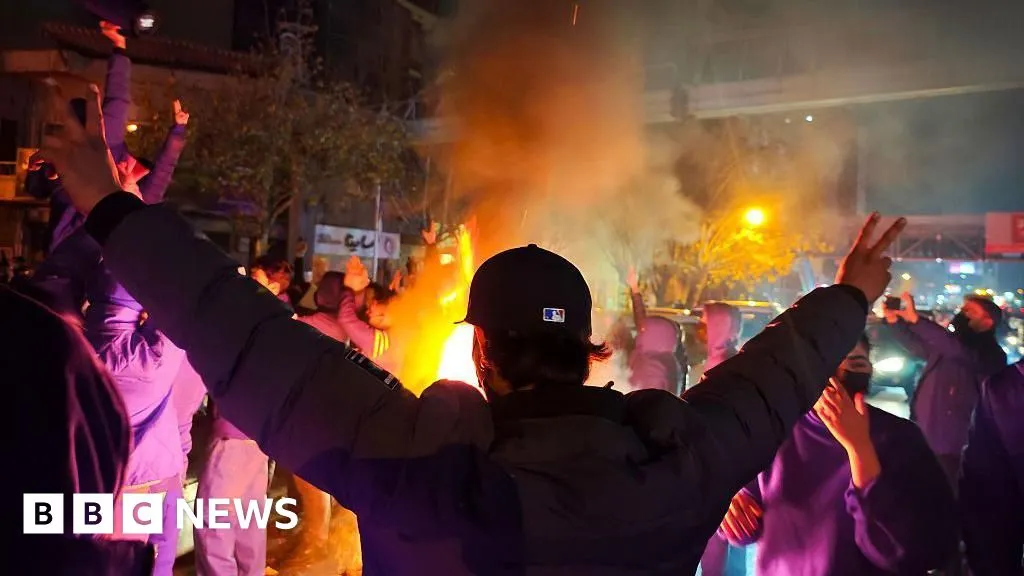
Saleh Mohammadi, a 19-year-old wrestling champion, was executed by hanging on March 19, 2026, in Qom, Iran. His execution has sparked outrage and condemnation from human rights activists and international observers, who argue that it exemplifies the Iranian regime’s brutal crackdown on dissent.
Mohammadi was accused of killing two police officers during protests that erupted in January 2026. His trial, however, was marred by allegations of forced confessions and a complete lack of due process, raising serious questions about the legitimacy of the charges against him. “His execution was a blatant political murder, part of the Islamic Republic’s pattern of targeting athletes to crush dissent and terrorize society,” said Nima Far, a prominent human rights advocate.
The numbers
In a swift judicial process, Mohammadi was sentenced to death on February 4, 2026, just one month after his arrest. He was executed alongside two other men, Saeed Davoudi and Mehdi Ghasemi, who were also implicated in the protests. The Iranian regime claimed that the three acted on behalf of foreign adversaries, specifically Israel and the United States, a narrative that many observers dismiss as a pretext for silencing opposition.
Mohammadi had previously gained recognition in the sports world, winning a bronze medal at the Saytiyev International Cup in September 2024. His achievements in wrestling made his execution all the more poignant, symbolizing the regime’s willingness to eliminate even its most celebrated athletes in the name of political control. “I feel very bad for him and his family. There should be a boycott of the regime when it comes to international sport,” remarked Alizreza Nader, an analyst on Iranian affairs.
The Iranian judiciary’s actions have drawn sharp criticism from various organizations, including the U.S. State Department, which expressed deep concern over the imminent execution of Mohammadi. “The United States is deeply concerned by reports that 19-year-old wrestling champion Saleh Mohammadi is facing imminent execution,” a spokesperson stated, highlighting the international ramifications of Iran’s human rights record.
Human rights organizations have condemned the executions as state-sanctioned murder, aimed at instilling fear in the population. The Center for Human Rights in Iran (CHRI) described the process as a sham, stating, “Executing these young protesters in public, after sham trials built on torture and forced confessions, is state-sanctioned murder designed to terrorize the population and send a clear message: any act of dissent will be met with death.” This sentiment resonates widely, as the regime continues to face mounting pressure from both domestic and international fronts.
As the dust settles on this tragic event, observers remain vigilant, anticipating further developments in Iran’s ongoing struggle for human rights and political freedom. The executions of Mohammadi and his fellow protesters underscore a grim reality for many in Iran, where dissent is met with swift and brutal retribution. Details remain unconfirmed regarding the potential for international intervention or further actions by organizations like the International Olympic Committee and United World Wrestling, which have been called upon to respond to these human rights violations.