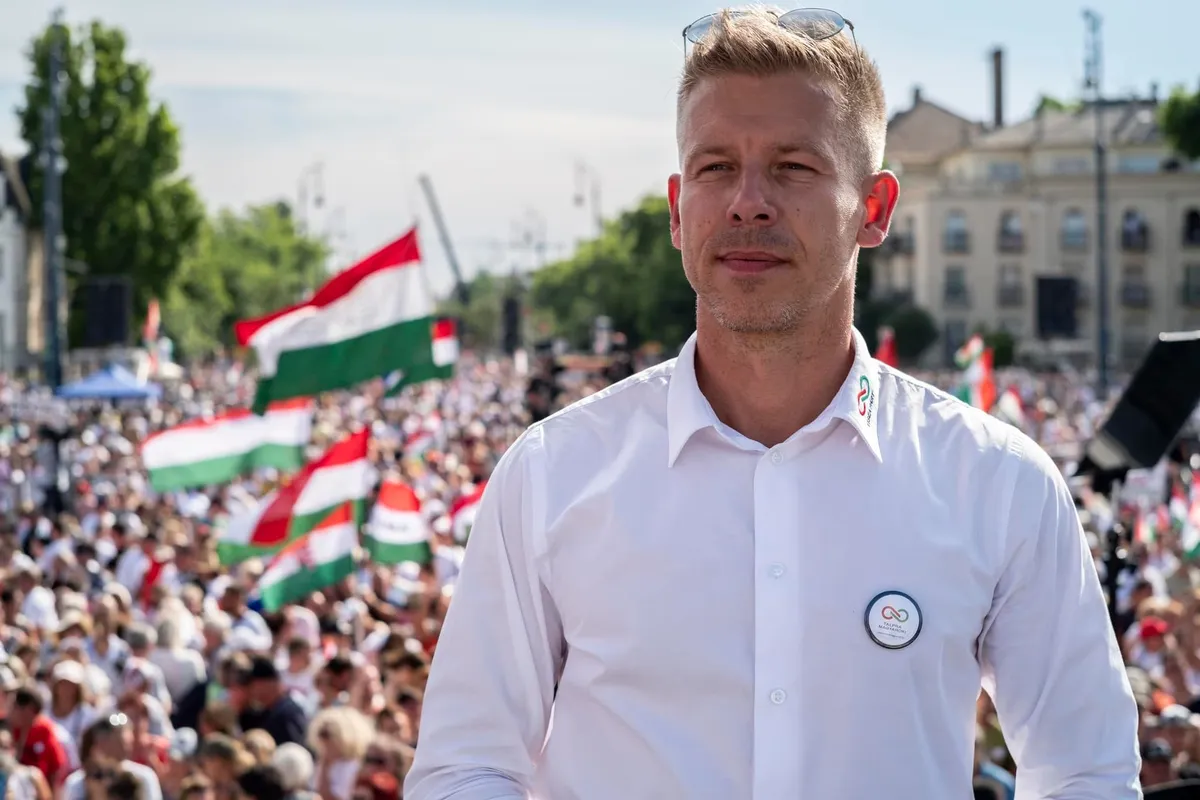
“This is a historic moment, not only for Hungary, but for European democracy,” declared Sir Keir Starmer, reflecting the seismic shift in Hungarian politics following Péter Magyar’s election victory. The leader of the Tisza party has successfully unseated Viktor Orbán’s Fidesz party, which had dominated the political landscape for 16 years.
In a stunning electoral outcome on April 12, 2026, the Tisza party is projected to secure 135 mandates in Hungary’s 199-seat parliament, capturing approximately 45.7 percent of the vote. This marks a significant rise from the 29.6 percent the party achieved in the recent European Parliament elections, where it gained seven mandates.
Before this victory, Péter Magyar was relatively unknown in the political arena. His rise to prominence can be attributed to his ability to unify various opposition factions and build the largest opposition party in Hungary since its founding in 2020, officially named the Party of Respect and Freedom. His campaign was marked by extensive grassroots efforts, with Magyar visiting 500 locations across the country to connect with voters.
Magyar’s ascent is further complicated by personal ties to the previous administration. His wife, Judit Varga, served as the minister of justice under Orbán before resigning amid a scandal involving government interference in a corruption case. Magyar himself recorded a conversation with Varga that highlighted these issues, which he described as “propaganda” orchestrated by Orbán’s circle.
As he prepares to take office, Magyar has made bold promises to restore a democratic rule-of-law state, emphasizing a zero-tolerance policy towards corruption. He plans to join the European Public Prosecutor’s Office and has proposed limiting the prime minister’s term to eight years, which would retroactively apply to Orbán.
Additionally, Magyar’s Tisza party aims to implement a new media law that would suspend propagandistic public-service media news programs, signaling a commitment to reforming the media landscape in Hungary. This approach is seen as essential for fostering a more transparent and accountable government.
Viktor Orbán, while conceding defeat, stated, “We are going to serve the Hungarian nation and our homeland from opposition as well.” This suggests that the former prime minister is not stepping away from the political scene entirely, indicating a potential for continued political tension in the country.
As Hungary embarks on this new chapter, the implications of Magyar’s victory extend beyond national borders, potentially influencing democratic movements across Europe. Observers will be closely watching how the Tisza party implements its ambitious agenda and whether it can effectively navigate the challenges ahead.