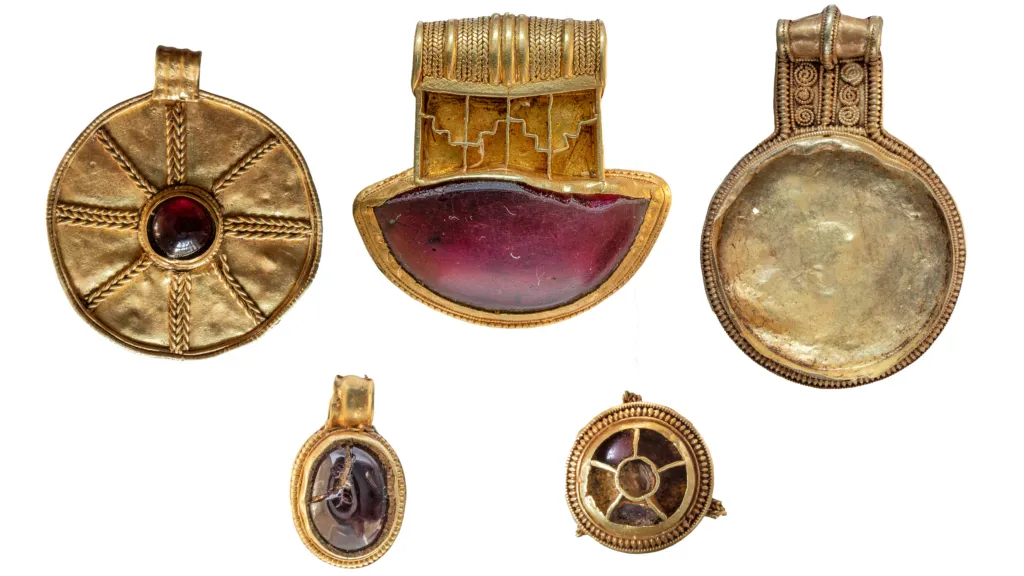
The Lincoln Museum has made a significant acquisition that highlights the rich history of Anglo-Saxon craftsmanship. Supported by the Beecroft Bequest, the museum has secured a collection of five exquisite pieces of gold and garnet jewellery dating back to the 7th century. This acquisition not only enriches the museum’s offerings but also serves as a vital link to early medieval England’s burial practices.
The jewellery was unearthed by two metal detectorists in plough soil, a discovery that has captured the attention of historians and archaeologists alike. Each piece is remarkably preserved, displaying only minor damage, which is a testament to the craftsmanship of the era. The combination of garnet and gold is characteristic of the period, making these items particularly valuable.
Among the collection, the largest pendant features an unusually large scallop-shaped garnet, complemented by cloisonné-stepped cells. Additionally, a disc-shaped pendant retains its central garnet setting, showcasing intricately plaited gold filigree. Experts believe that the gold and garnet boss may originate from a rare composite disc brooch, further emphasizing the uniqueness of this find.
Dawn Heywood, a representative from the museum, expressed excitement about the acquisition, stating, “This stunning jewellery, which spent over a thousand years buried in the earth, will be the centrepiece of new displays in our permanent archaeology gallery.” This statement underscores the importance of the jewellery not just as artifacts, but as educational tools for the community.
The jewellery will be prominently featured in the museum’s permanent archaeology gallery, which houses over two million archaeological objects. This acquisition is not only a win for the museum but also for the local community, as it enhances public engagement with history and preserves these treasures for future generations.
The Portable Antiquities Scheme, which encourages the reporting of archaeological finds, played a crucial role in this discovery. The museum’s commitment to protecting and showcasing such items reflects a broader effort to engage the public with the region’s rich historical narrative.
As the museum prepares to unveil these remarkable pieces, observers anticipate that they will draw significant interest from both local residents and tourists, eager to learn more about the Anglo-Saxon era. The unveiling is expected to take place in the coming months, promising to be a highlight for the museum’s ongoing efforts to celebrate and preserve Lincolnshire’s archaeological heritage.