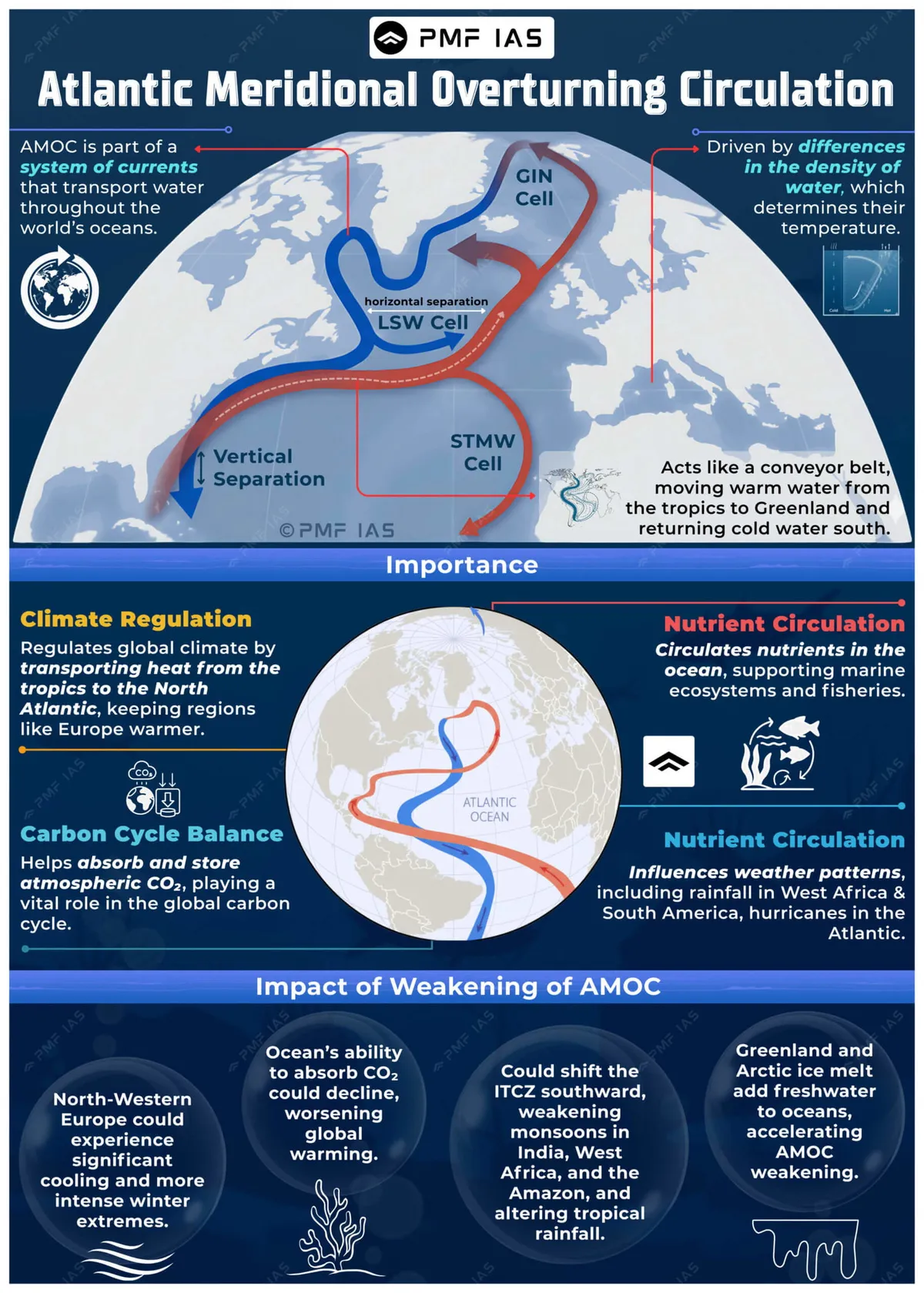
Recent scientific studies have raised alarm over the Atlantic Meridional Overturning Circulation (AMOC), a crucial system of ocean currents in the Atlantic Ocean. This system plays a vital role in regulating global climate by transporting warm surface waters from equatorial regions toward higher latitudes. However, rising global temperatures are causing ocean waters to warm, which reduces the temperature differences that drive this circulation, leading to a weakening of AMOC.
As we delve into the timeline of events, it becomes clear that the weakening of AMOC is not a sudden occurrence but rather a trend that has been developing over decades. The influx of freshwater from melting ice is significantly impacting salinity levels in the North Atlantic. This reduction in salinity decreases water density, inhibiting the essential sinking process that drives AMOC. Satellite data indicates that the Gulf Stream, a critical component of AMOC, has shifted northward by approximately 50 kilometers over the past 30 years, further illustrating the ongoing changes.
Current assessments suggest that AMOC may already be weaker than at any time in the last thousand years, indicating a long-term declining trend. This weakening could lead to a slowdown in heat transport, resulting in colder climatic conditions in Europe, despite the overarching trend of global warming. Such a paradoxical situation highlights the complexity of climate dynamics and the interconnectedness of ocean currents and regional climates.
The implications of a weakening AMOC are profound. It is projected that a complete collapse of this system could trigger abrupt and potentially irreversible climate changes across multiple regions. This includes significant impacts on rainfall patterns, monsoons, and storm systems across continents, affecting areas such as Africa, Europe, and Asia. Moreover, the potential release of 47-83 gigatonnes of carbon dioxide (CO2) into the atmosphere due to AMOC failure could exacerbate global warming, with estimates suggesting a 0.2 degrees Celsius increase in global temperatures and a staggering 640 billion tonnes of CO2 potentially released near Antarctica.
Experts warn that the timeline for potential AMOC collapse could be as short as 25-50 years, with significant consequences expected to unfold in the following centuries. Johan Rockström, a prominent climate scientist, cautioned, “We have to be very careful, because when one thing goes wrong, it can have these domino effects.” This statement underscores the urgency of addressing the factors contributing to AMOC’s decline.
Furthermore, the weakening of AMOC is expected to cause sea levels to rise along certain coastlines, particularly the eastern coast of North America. The interconnected nature of ocean currents means that the effects of AMOC weakening will not be confined to the Atlantic region but will resonate globally, impacting weather patterns and climate stability worldwide.
As the situation evolves, uncertainties remain regarding the exact timeline and magnitude of impacts resulting from AMOC weakening. Some climate models predict a gradual weakening rather than a sudden collapse, but details remain unconfirmed. The scientific community continues to monitor these developments closely, emphasizing the need for urgent action to mitigate the factors contributing to this critical climate system’s decline.