What the data shows
The upcoming Artemis II launch raises a critical question: How will NASA’s mission to send astronauts around the Moon redefine human space exploration? Scheduled for January 17, 2026, this mission will mark the first time in 50 years that astronauts will orbit the Moon, a significant milestone for space travel.
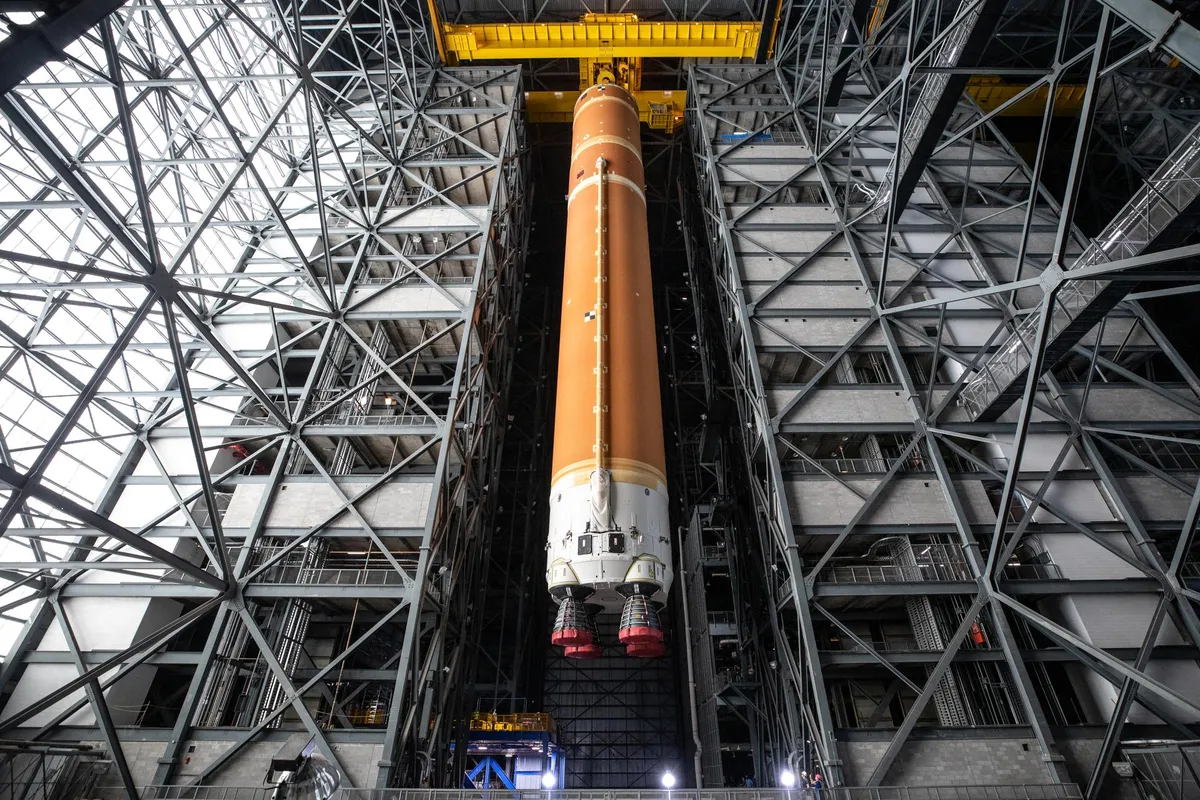
Artemis II will utilize the Space Launch System (SLS) rocket and the Orion spacecraft, designed to carry a crew of four astronauts on a ten-day journey around the Moon. This mission aims not only to test the systems necessary for returning humans to lunar orbit but also to pave the way for future human exploration of Mars. As Scott Pace, a prominent figure in NASA’s planning, stated, “We’re about to send humans in orbit around the Moon again.” This statement underscores the mission’s historic significance.
The crew for Artemis II includes NASA astronauts Reid Wiseman, Victor Glover, Christina Koch, and Canadian astronaut Jeremy Hansen. Their journey will begin with a launch countdown that starts approximately two days before liftoff, involving meticulous preparations and checks by the launch team. The countdown will feature ‘L Minus’ and ‘T Minus’ times, indicating the final moments leading up to the launch.
NASA has not sent astronauts to the Moon since the 1970s, making this mission a pivotal moment in the agency’s Artemis program. The last crewed lunar mission, Apollo 17, took place in December 1972. The Artemis program aims to revive human presence on the Moon and establish a sustainable human exploration framework.
As the countdown to Artemis II progresses, the mission’s success will depend heavily on the performance of the solid rocket boosters during launch, as highlighted by Scott Pace. The mission is not just about reaching the Moon; it is a critical step toward ensuring humanity’s future in space, which Pace notes hinges on two sub-questions that remain to be addressed.
With the launch date approaching, preparations are in full swing, and the excitement surrounding this mission is palpable. However, details remain unconfirmed regarding specific launch day operations and any potential challenges that may arise. The Artemis II mission is poised to be a landmark event in space exploration, rekindling humanity’s aspirations for lunar and interplanetary travel.
As we look forward to this historic launch, the world watches closely. The Artemis II mission represents not just a return to the Moon but a renewed commitment to exploring the cosmos and expanding our understanding of space.